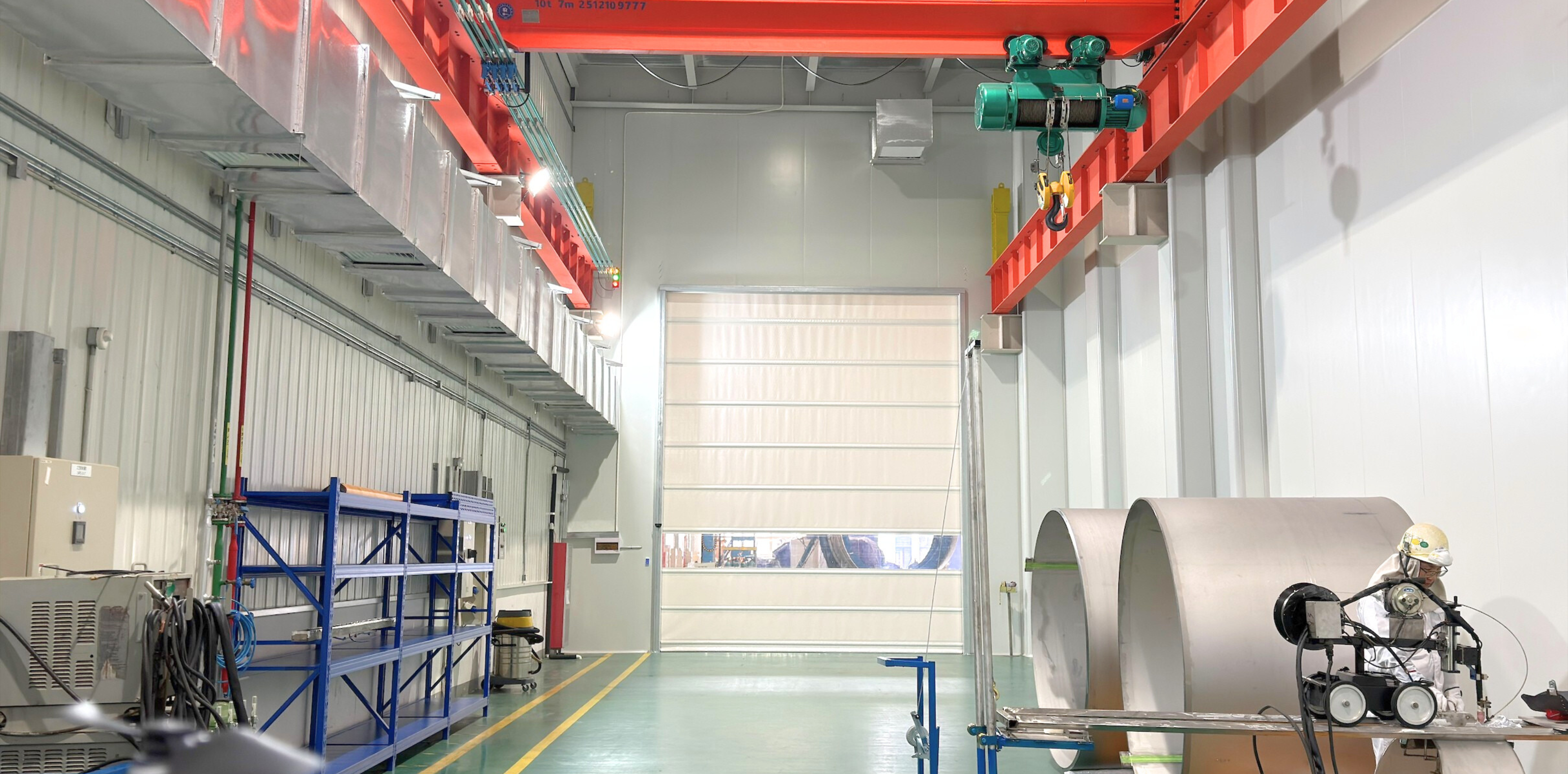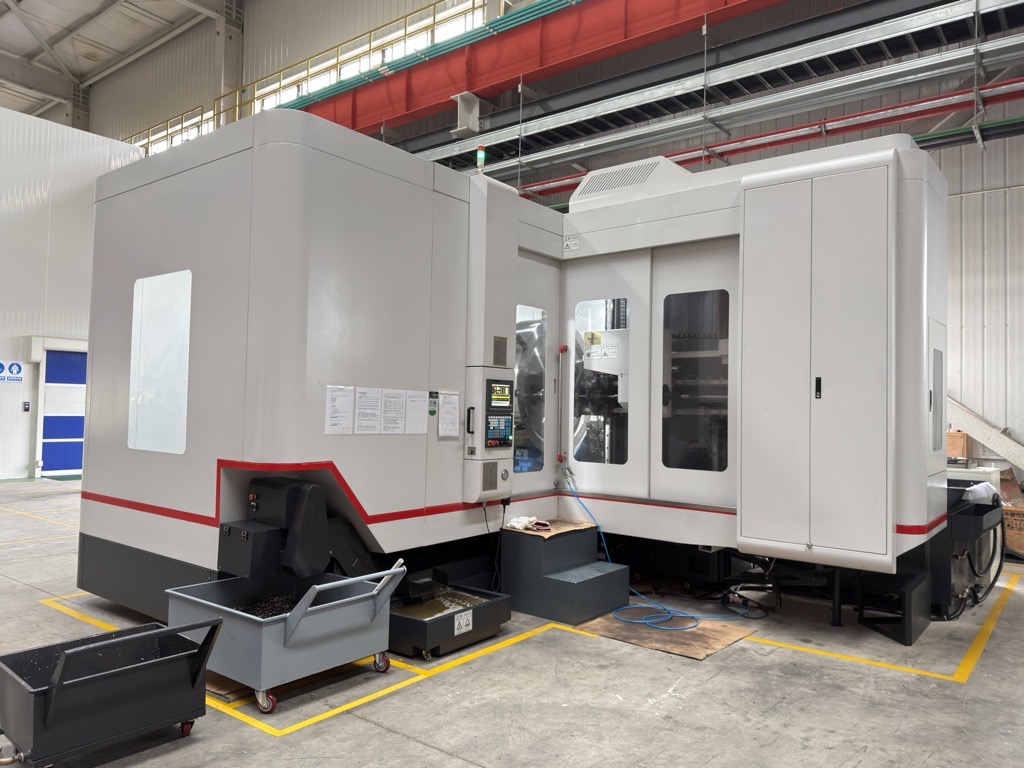
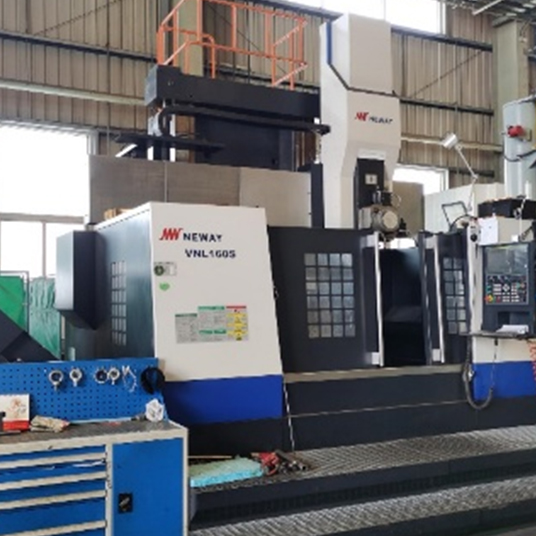



Equipment weight: 8100 kg
Maximum turning diameter × length: Φ630 mm × 1500 mm
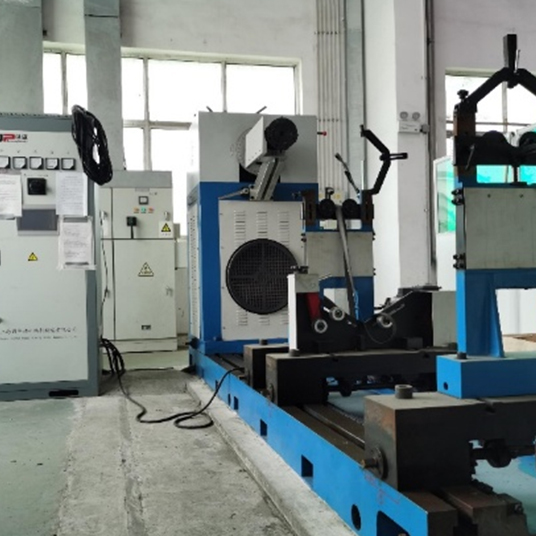
Total capacity: 30 kVA
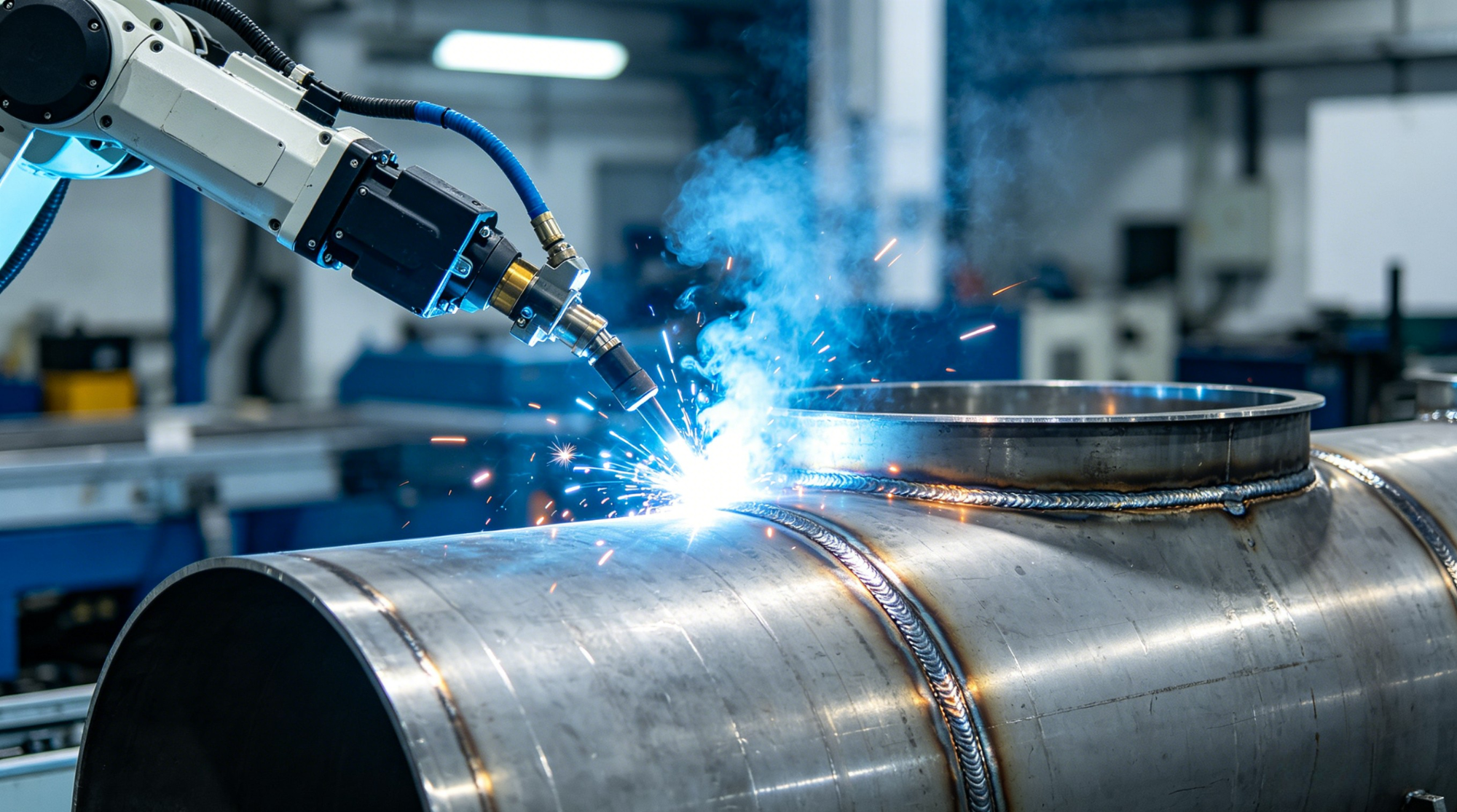
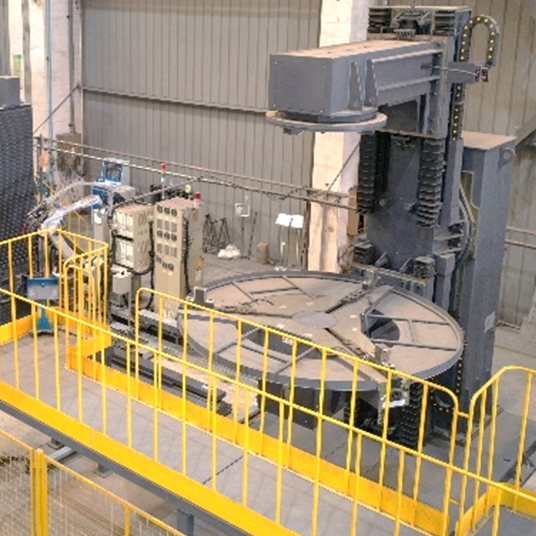
Welding method: TIG welding (Tungsten Inert Gas)
Maximum clamping diameter of rotary table: 3000 mm
Maximum rotation angle of rotary table: Tilt axis: ±90°
Rotation axis: 360°
Maximum load capacity of rotary table: 5000 kg
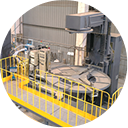
Processing range: Circumferential seam welding of heat exchanger channel shells and equipment flanges; nozzle D-seam welding on heads and shells; structural component welding including gore head seams, supports, frames, etc.
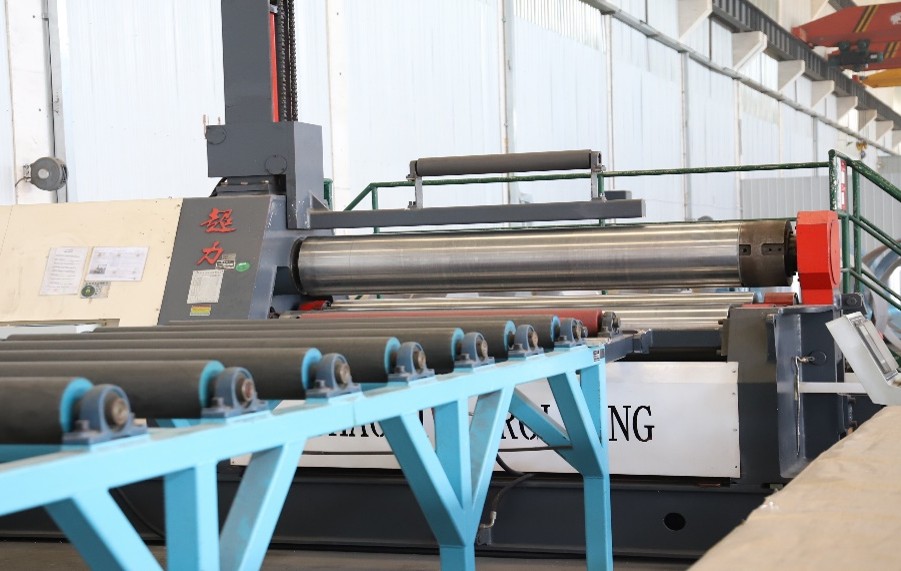
Equipment model: W12CNC-20×2000
Max. rolling thickness: 20 mm
Max. pre-bending thickness: 16 mm
Max. rolling width: 2000 mm
Plate yield strength: 245 MPa
Top roll diameter: 350 mm
Bottom roll diameter: 330 mm
Side roll diameter: 250 mm
Hydraulic system working pressure: 18 MPa
Hydraulic motor power: 185 kW
Maximum Rotor Mass: 30,000 kg


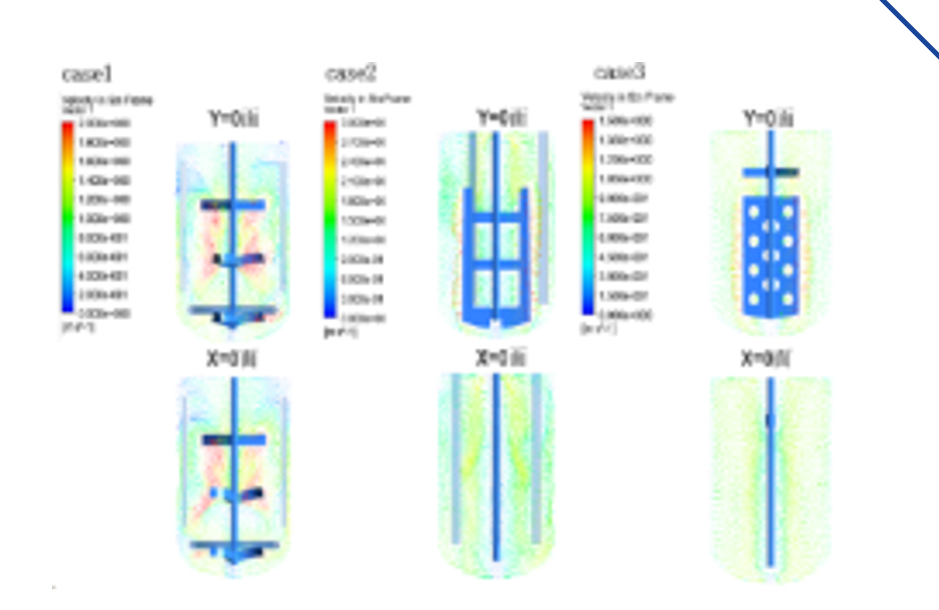
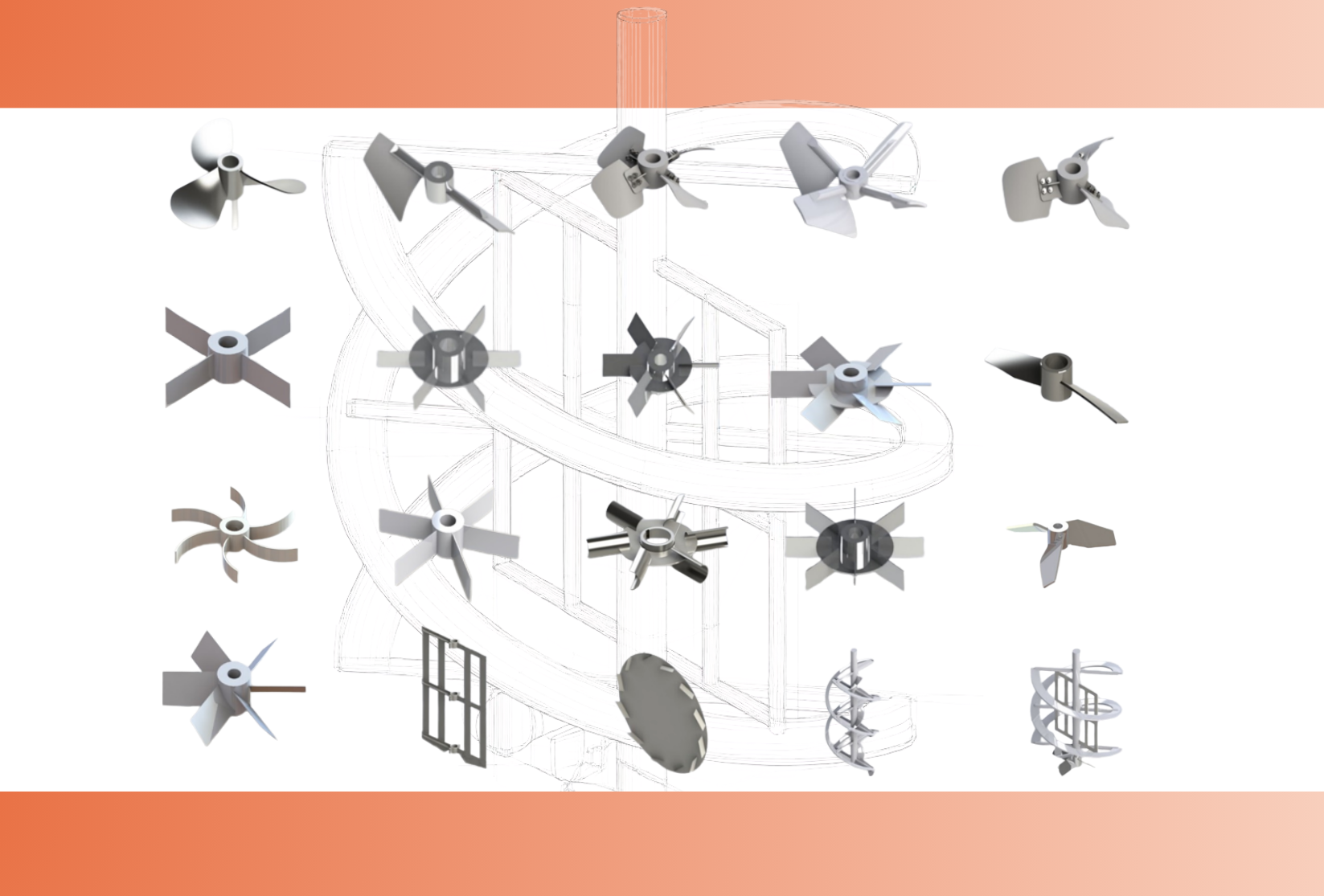
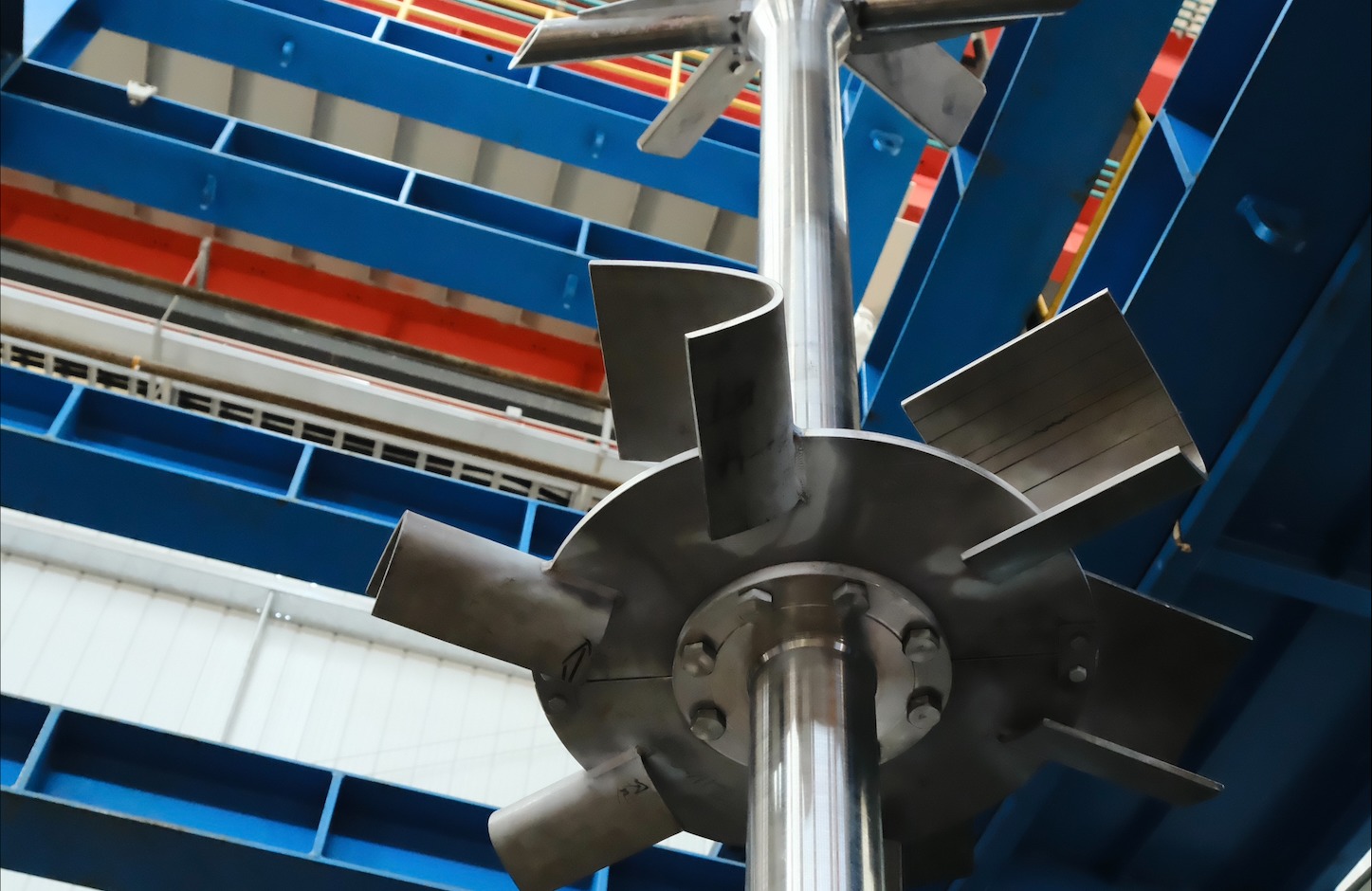
Axial flow impeller, radial flow impeller, mixed/tangential flow impeller, dispersion disc, etc.
Proprietary patented impeller, etc.
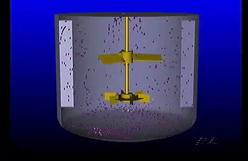
Agitation Test
Process Validation
New project R&D
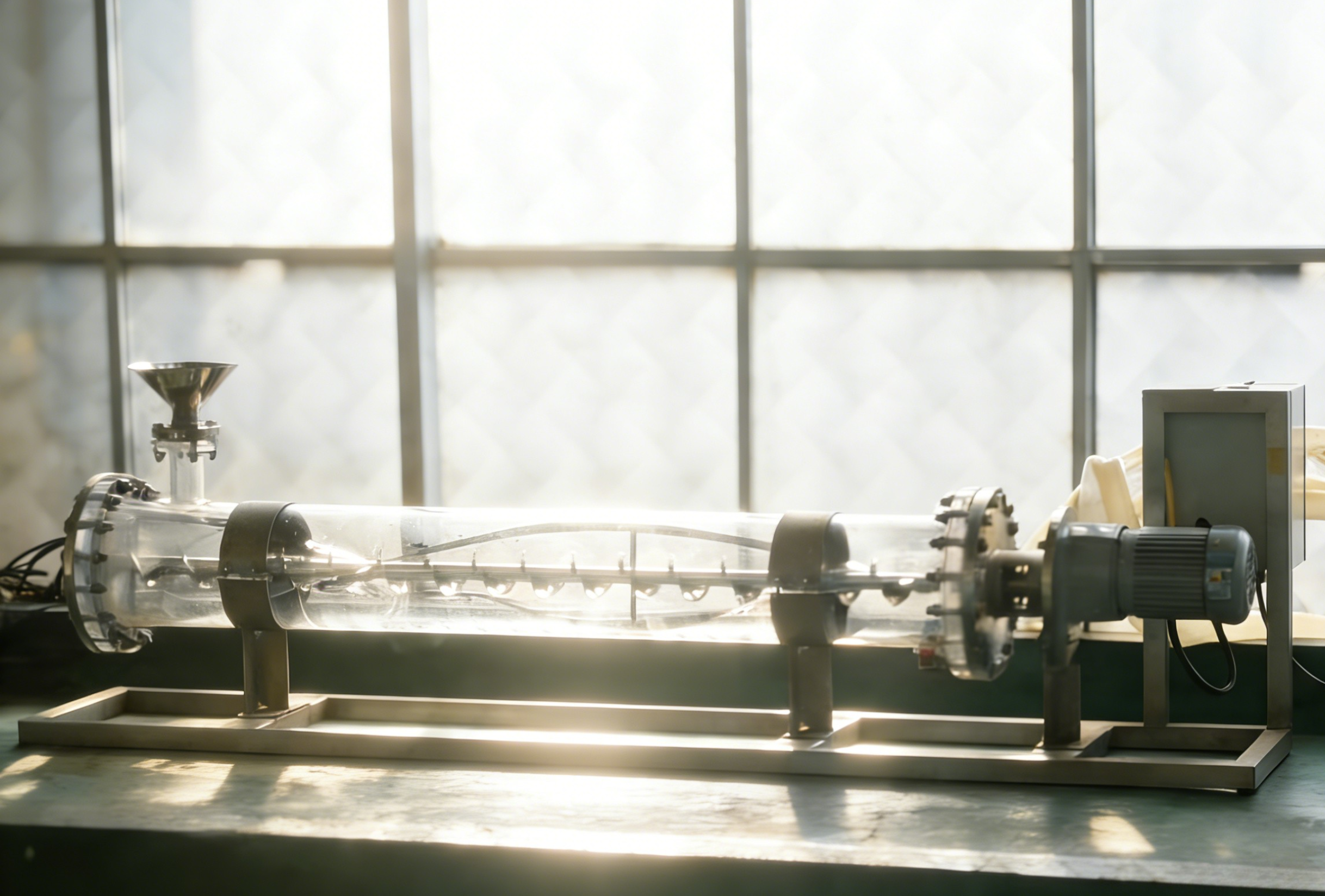
Process feasibility verification: Validates lab-scale routes on a small continuous unit.
Preliminary data collection: Obtains key parameters (temperature, pressure, time, ratio, speed).
Catalyst & material screening: Tests effects on efficiency and product quality.
Sample preparation: Produces gram-to-kilogram samples for analysis.
Problem identification: Reveals potential issues (heat/mass transfer, side reactions, separation).
Characteristics: Small scale (mostly glass), flexible, low cost, easy to modify.
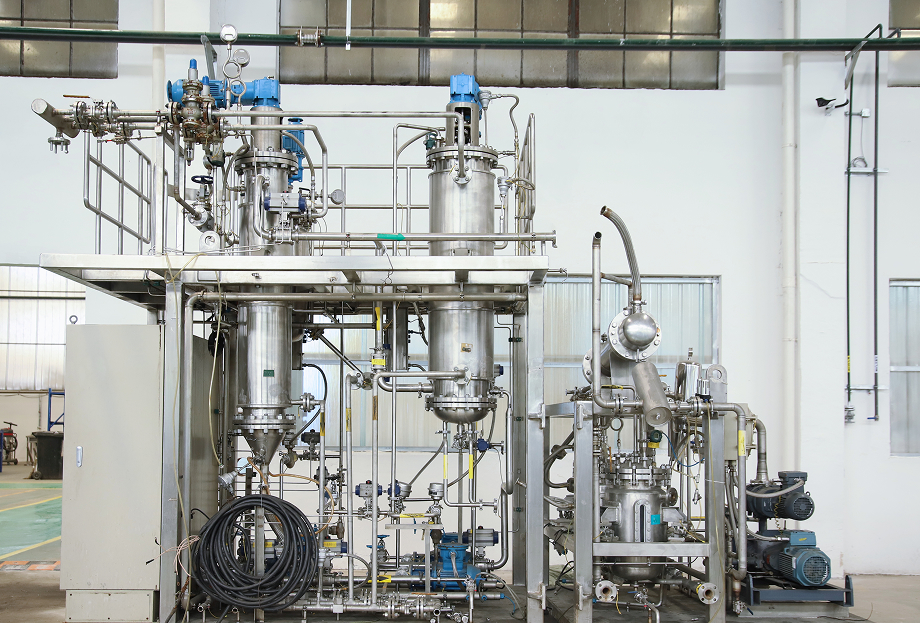
Engineering investigation: Studies scale-up effects (heat/mass transfer, fluid dynamics), conveying, heat recovery, equipment selection, corrosion, wear, etc.
Process optimization: Finalizes all parameters and establishes SOP.
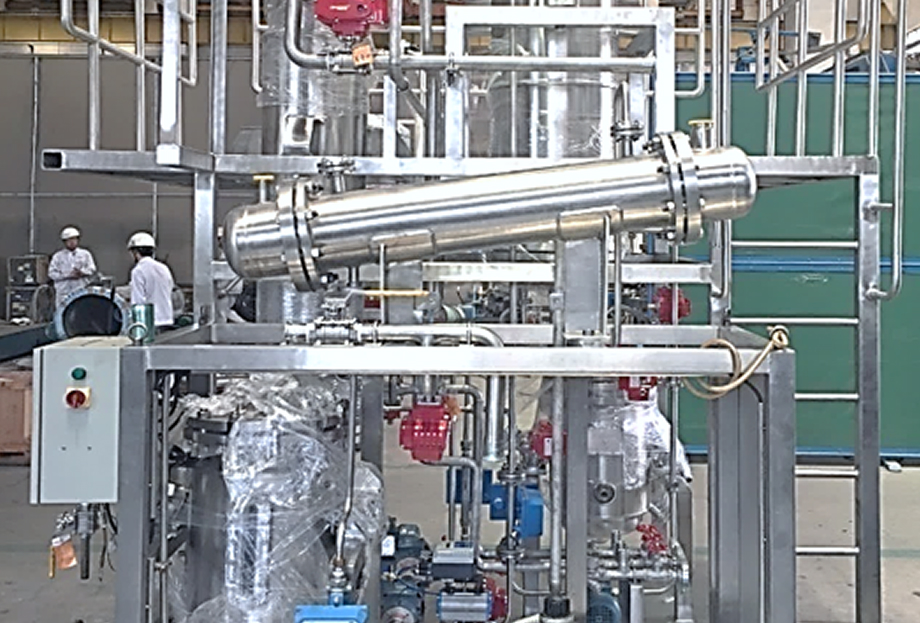
Equipment validation: Screens and validates equipment types, materials, and specifications for production.
Design data acquisition: Provides comprehensive data for industrial plant design (primary purpose).
Continuous operation testing: Verifies long-term stability, reliability, and safety.
Sample production: Produces kg/ton-scale samples for trials, market development, or certification.
Characteristics: Bridge between lab and plant, scaled-down equipment, higher investment, complex, critical for reducing scale-up risk.
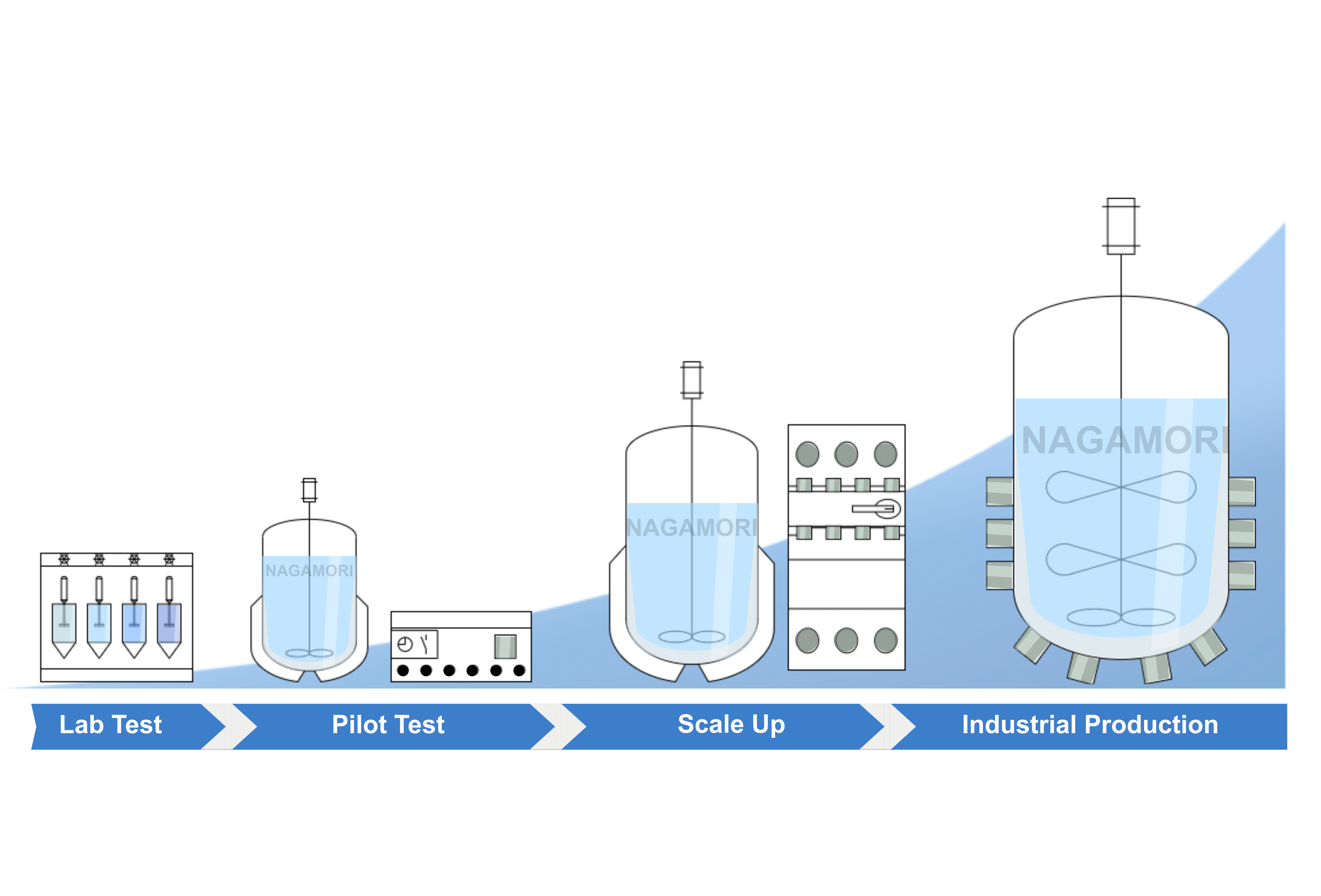
Core Challenge: Solving scale effects—e.g., achieving the same mixing in a 10 m³ reactor as in a beaker, or maintaining lab-scale temperature control in large equipment.
Methodology: Using chemical engineering principles (similarity scaling, modeling, dimensional analysis) to predict and resolve scale-up issues.
Throughout the process: Scale-up spans lab → pilot → industrial. Lab work provides clues; pilot is the core practical stage.